Nutri-Track
MFA’s precision nutrient management program
MFA’s Nutri-Track program provides location-specific fertilizer recommendations through grid soil sampling and variable-rate fertilizer applications. Nutri-Track can also combine these soil tests with a grower’s yield data to make precision nutrient recommendations, putting nutrients where they are needed and avoiding over-application in areas that won’t perform.
Mind your Ps and Ks
Maximize forage fertility with precision applications.
Every hay bale and grazing day removes valuable nutrients from your forage fields. Are you replacing them where they’re needed most? Hay and pasture acres often have greater variability in soil fertility than row-crop ground, but Nutri-Track’s precision grid sampling and variable-rate technology can replace those nutrients more efficently than a one-size-fits-all approach. Fall is the ideal time to apply phosphorus and potassium and build a stronger foundation for next year’s forages.
To learn more or enroll your acres in Nutri-Track, check with your local MFA affiliate or click here to find the precision specialist nearest you.
How do common perceptions about soil fertility compare to reality? Click each plus sign to see the Nutri-Track approach.
 Reality: You can not add enough starter fertilizer to the crop production system to overcome poor baseline field fertility levels. Starter fertilizer works great when you’re not relying on it to drive total bushels. It’s called a starter fertilizer because it helps the crop start. It’s not a “finisher” fertilizer.
 Reality: Nitrogen should be applied variably to match field productivity, avoiding overuse in low-yield areas and underuse in high-yield areas. The variation in yield in a field dictates that we supply different amounts of nitrogen based on the actual field production ability, at a sub-acre level. For example, applying 160 units of nitrogen across an entire cornfield, regardless of the varying abilities to produce corn, keep us from reaching the upper limits of our yield.
 Reality: Underlying soil fertility and pH is (generally) more variable in hay and pasture acres than in traditional row-crop areas. You can not accurately address fertility needs with a flat rate application of any lime OR fertilizer product in forages.
 Reality: Geospatial yield data enables precise fertilizer application by replacing nutrients based on actual sub-acre production rather than field averages. Combining yield data with grid-soil sampling data, you can apply more fertilizer where more production was removed and less where less production was removed. This places fertilizer more effectively across every acre by not assuming a flat or static yield goal.
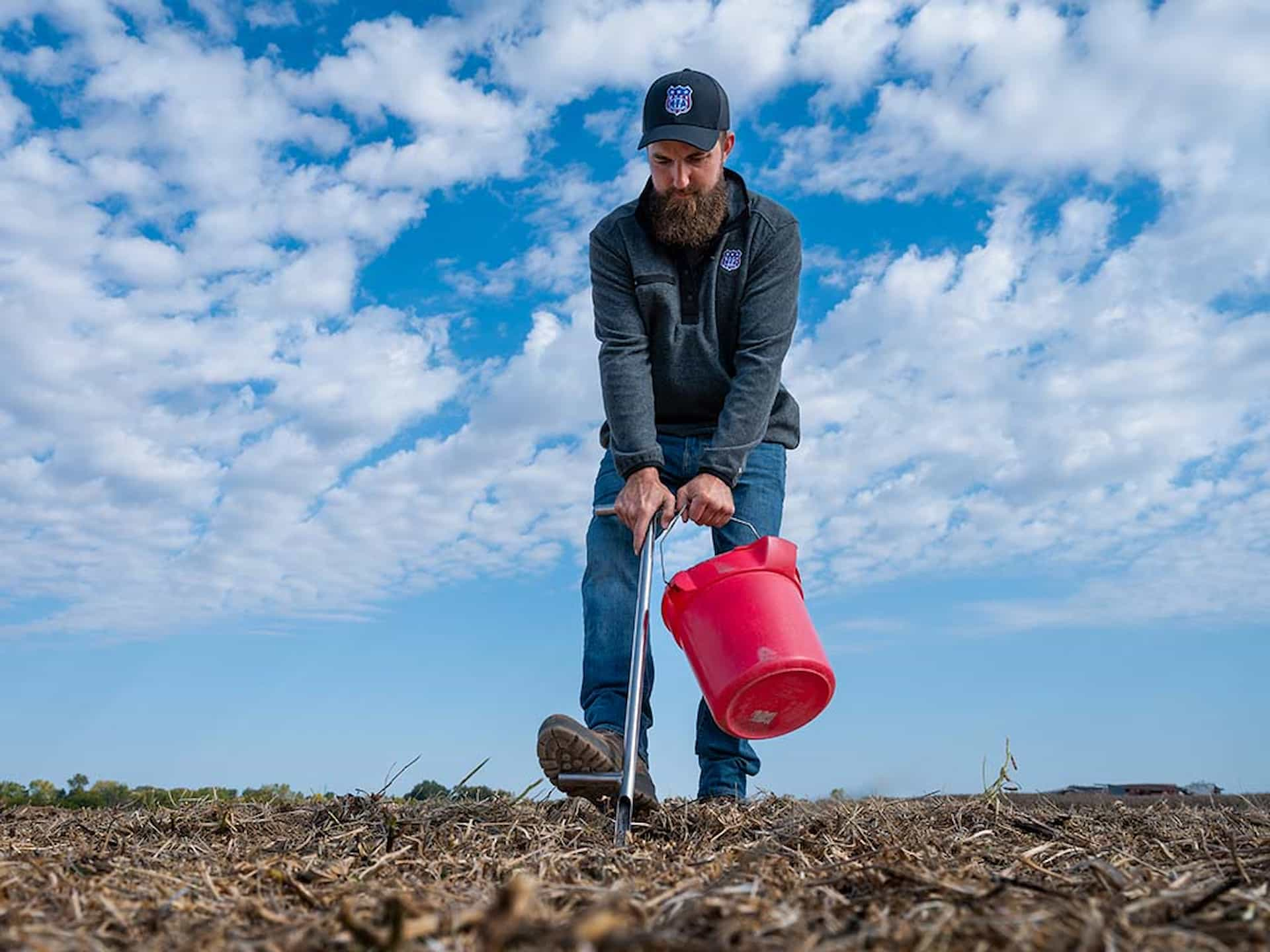 Reality: Composite soil samples often misrepresent fertility levels, making them unreliable for accurate fertilizer recommendations. By its very nature, a composite sample is an average, and it is more often WRONG than it is actually RIGHT.
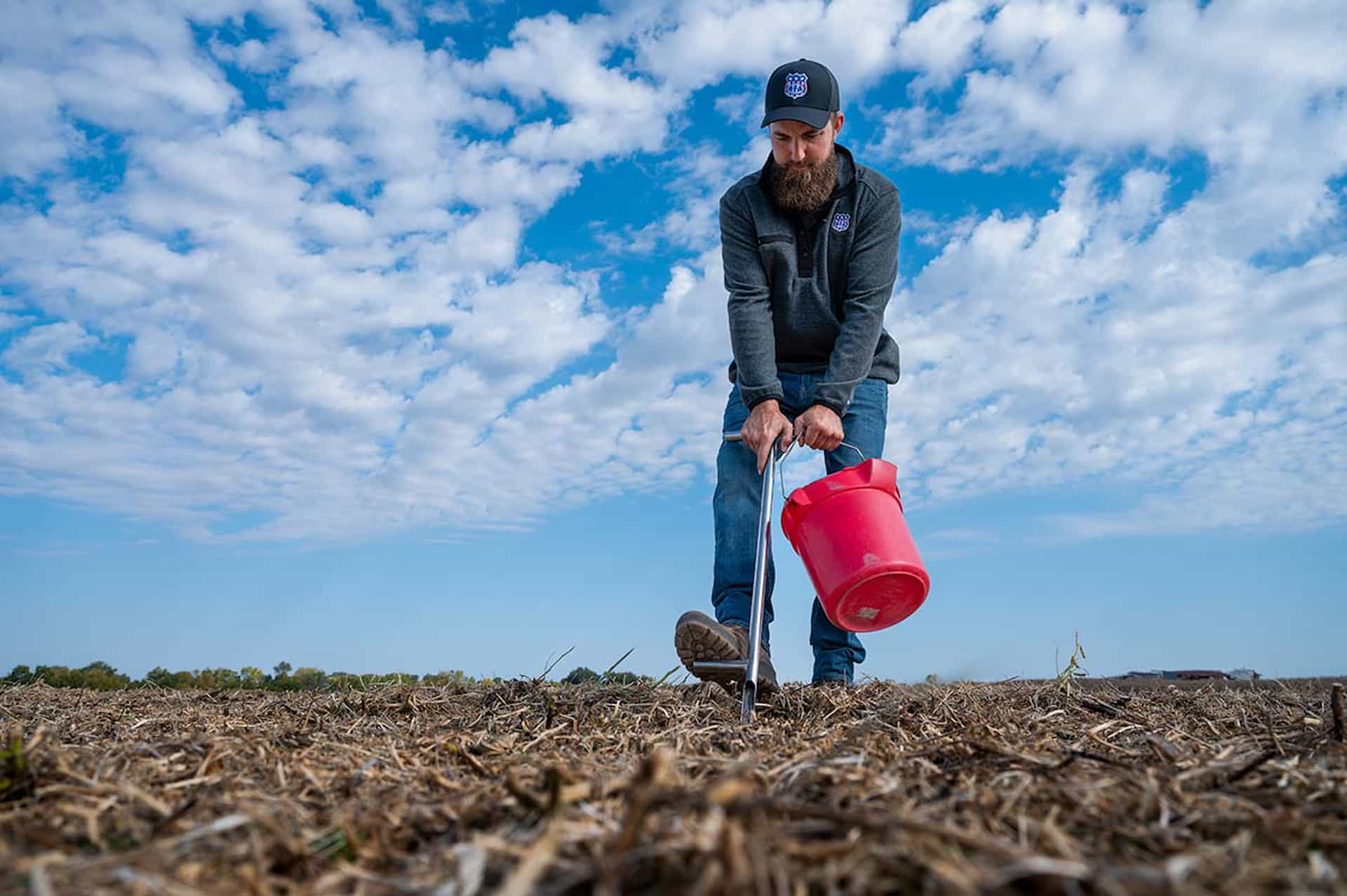
Nutri-Track is designed to:
- Manage fertility levels on an acre-by-acre basis
- Continuously adjust recommendations based on proven field productivity
- Provide diligent record keeping to ensure sound agronomic decisions
- Eliminate nutrients as grain quality or yield-limiting factors
- Make most effective use of the farmer’s fertility investment
- Promote proper stewardship of the land
To learn more or enroll your acres in Nutri-Track,
check with your local MFA affiliate or
click here to find the precision specialist nearest you.
Have a question about Nutri-Track?
If you have a question related to Nutri-Track or other MFA precision agronomy services, send us a message here. We will direct it to the appropriate expert and get you an answer. If you have specific questions about availability or pricing at your MFA retail store, contact your MFA representative or use our Store Locator to find information for the location nearest you.