Simple steps can stop the spread
By Allison Jenkins
New MDC guide offers practical tools to protect Missouri’s native landscapes
Taking a few minutes to clean a mower deck, tractor, truck bed or combine may seem like an insignificant chore that hinders more important tasks on the farm. But according to the Missouri Department of Conservation (MDC), this simple step can have a huge impact in preventing the spread of invasive plants.
Seeds, soil and plant material can easily hitch a ride on equipment as it moves from one field, pasture or property to another. Once invasive plants gain a foothold, they often overtake native landscapes and require significant investments of time and money to keep in check.
That message is central to MDC’s new publication, “Preventing the Spread of Invasive Plants: Best Management Practices for Land Managers.” The guide was developed by MDC’s Invasive Species Working Group to provide practical, standardized recommendations for the agency’s staff as well as farmers, property owners, conservationists, contractors and anyone who manages land.
“Prevention is the most cost-effective thing we can do when it comes to controlling invasive species,” said Angela Sokolowski, MDC invasive species coordinator. “It’s that whole ‘stitch in time saves nine’ philosophy. Just like making safety an everyday best management practice, building a prevention culture to keep these plants from spreading can really pay off.”
Invasive plants are defined as nonnative species that cause economic or environmental harm. They typically spread aggressively and can dramatically alter habitats, reduce biodiversity and replace native species that provide food and shelter for wildlife, pollinators and other organisms.
“Invasive species are considered the second biggest threat to biodiversity on the planet, right behind habitat loss,” Sokolowski said. “They can have an impact across the board, from the quality of the natural world to the entire food chain and all the way to your pocketbook.”
The Missouri Invasive Plant Council identifies more than 140 species in this category. While the plants causing the most concern vary by region and habitat, some of Missouri’s most troublesome species include sericea lespedeza, which can dominate grasslands and other open habitats, and bush honeysuckle, which often fills the understory of forests and woodlands. Sokolowski also pointed to perilla mint, also known as beefsteak plant, as a species that appears to be spreading rapidly in recent years. In addition to displacing desirable vegetation, the plant can be toxic to cattle if consumed.
Because invasive plants vary in their effect on different habitats, Sokolowski encourages landowners to learn which species are most problematic in their area. Early detection and rapid response are key, she added, because catching a new infestation while it is still small can save significant resources compared to managing a large, established population.
“People don’t have to be invasive plant experts to do good prevention practices,” Sokolowski said. “It’s helpful to know how to identify the invasive species that we have here, especially the ones that are really impactful, but if you follow the recommendations in this guide, you can keep from spreading weeds that you don’t even know that you’re operating around.”
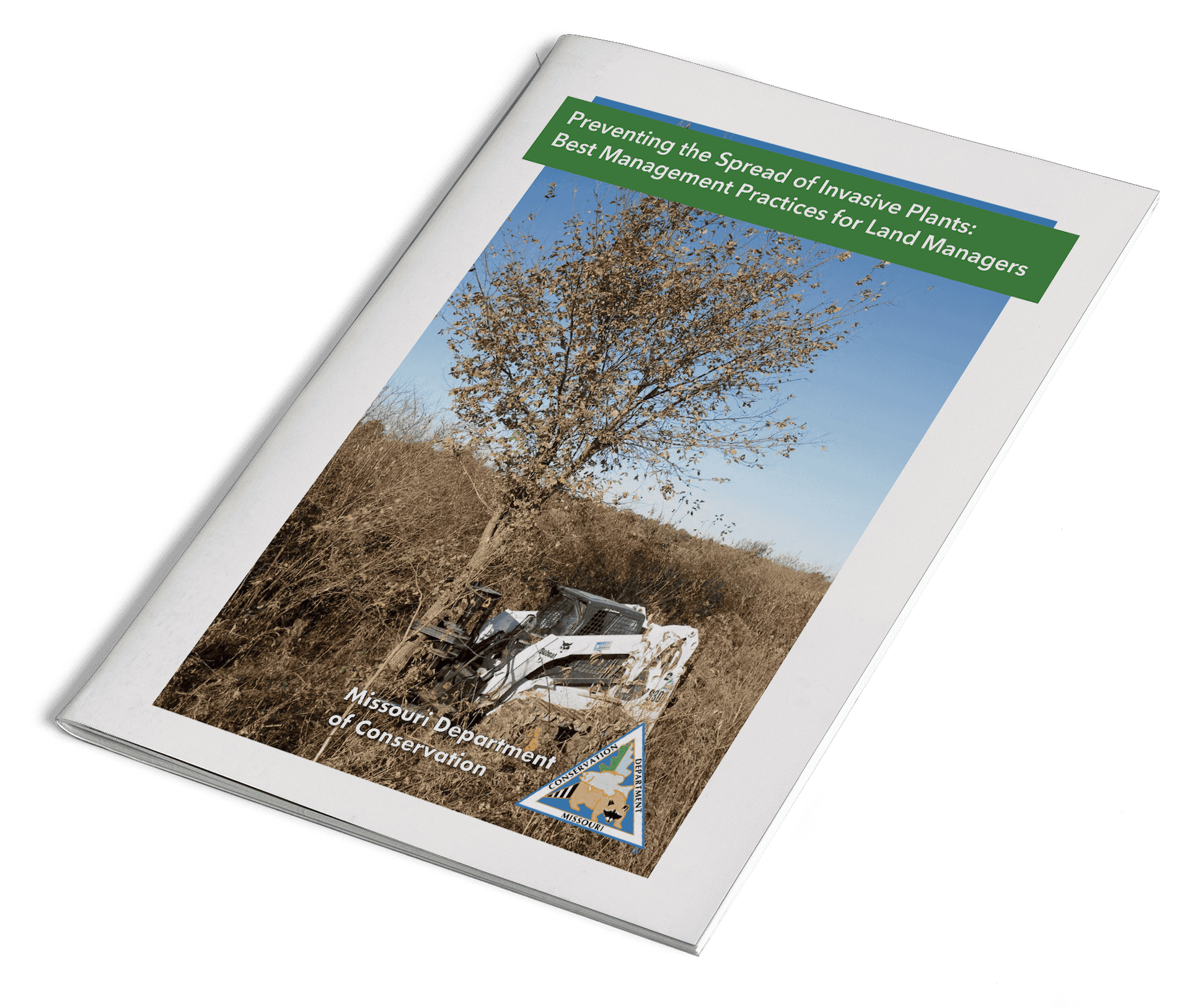 A particularly useful feature of the publication is its use of checklists and planners, which Sokolowski said can help ensure field crews, supervisors and land managers are all working from the same information. These tools are designed to improve communication and make sure prevention measures don’t get overlooked during day-to-day operations.
The guide also notes that timing can play an important role in invasive plant management. In general, treatment activities such as mowing or spraying are most effective before plants produce viable seed. Fall can be an especially useful time for identifying certain invasive species, Sokolowski said.
“Some species, like autumn olive and bush honeysuckle, stay green a lot later than native shrub or tree species,” she said. “If your tried-and-true oaks, hickories and other native trees have dropped their leaves, and you’ve still got these species with really healthy leaves, oftentimes that’s your billboard sign saying, ‘I’m invasive.’”
One reason prevention matters so much, Sokolowski continued, is that invasive plants don’t recognize property lines. Landowners who manage invasive species responsibly aren’t just protecting their own property. They’re helping reduce the spread to
neighboring farms, conservation areas and native landscapes.
“Ultimately, I would love to see people make invasive species prevention a
regular practice,” Sokolowski said. “If it just becomes a good habit, it will
have long-lasting effects.”
MDC’s invasive plant prevention guide is available for download at bit.ly/MDC_invasiveplantguide or https://mdc.mo.gov/sites/default/files/2026-09/BMP-Pocketguide.pdf.
***
Read MORE FROM THIS ISSUE
Subscribe Today or MFA Incorporated customers/members may request a subscription at their MFA Agri Services location.