Hunters helping neighbors
by Emily Kummerfeld
Missouri’s Share the Harvest program turns deer management into meals for families in need
As fall arrives across Missouri, the season awakens familiar rhythms. Combines roar to life, the leaves erupt in color, and thousands of hunters once again put on their camo and blaze orange. For generations, deer hunting has shaped our state’s culture—connecting us to the land, wildlife and each other.
And Missouri’s rich natural landscape yields plenty of deer to pursue. An estimated 1.7 million deer roam the state, and their common presence from the Bootheel to the northern plains ensures their place as a cherished part of our outdoor heritage.
But for many Missouri families, that abundance is harder to come by.
Last year, 800,000 people statewide faced food insecurity. Behind each number is a person with a unique story but the same need: consistent access to safe, nutritious food.
 At the same time, producers and landowners in some areas face the task of managing deer populations to reduce crop and property damage. Share the Harvest helps turn that effort into an opportunity to serve others.
“Share the Harvest addresses both challenges by providing nutritious protein to Missourians in need while supporting responsible deer management,” said Micaela Haymaker, director of operations for the Conservation Federation of Missouri.
Started in 1992 by a group of Missouri hunters, Share the Harvest is a statewide partnership between the Conservation Federation of Missouri, the Missouri Department of Conservation, Feeding Missouri, and the Missouri Association of Meat Processors.
Hunters donate deer. Local partner processors make it into ground venison. Local food banks and pantries receive the packaged meat and distribute it to neighbors in need.
It also gives one of Missouri’s most beloved traditions—deer hunting—an even greater purpose: helping hunters feed others in their communities and play a role in maintaining a healthy, balanced deer population.
Growing the harvest
On average, Share the Harvest receives about 5,000 deer donations each season. But as more families face food insecurity, the program has set a lofty goal for upcoming deer seasons: 6,500 deer in 2026 and 10,000 deer in 2027. Making that growth a reality requires collaboration from every part of the program.
“It’s not so much about goals as it is about building a system that can accept more deer,” said Jake Hindman, Share the Harvest expansion coordinator for the Missouri Department of Conservation (MDC). “The expansion effort is being built on feedback from hunters, from processors, from partners. And we’re really proud of that.”
Notable changes include increased reimbursement to processors at $105 per deer; centralized reimbursement through the Conservation Federation of Missouri; and a new no-cost-to-donate approach with participating processors—the primary suggestion from hunters.
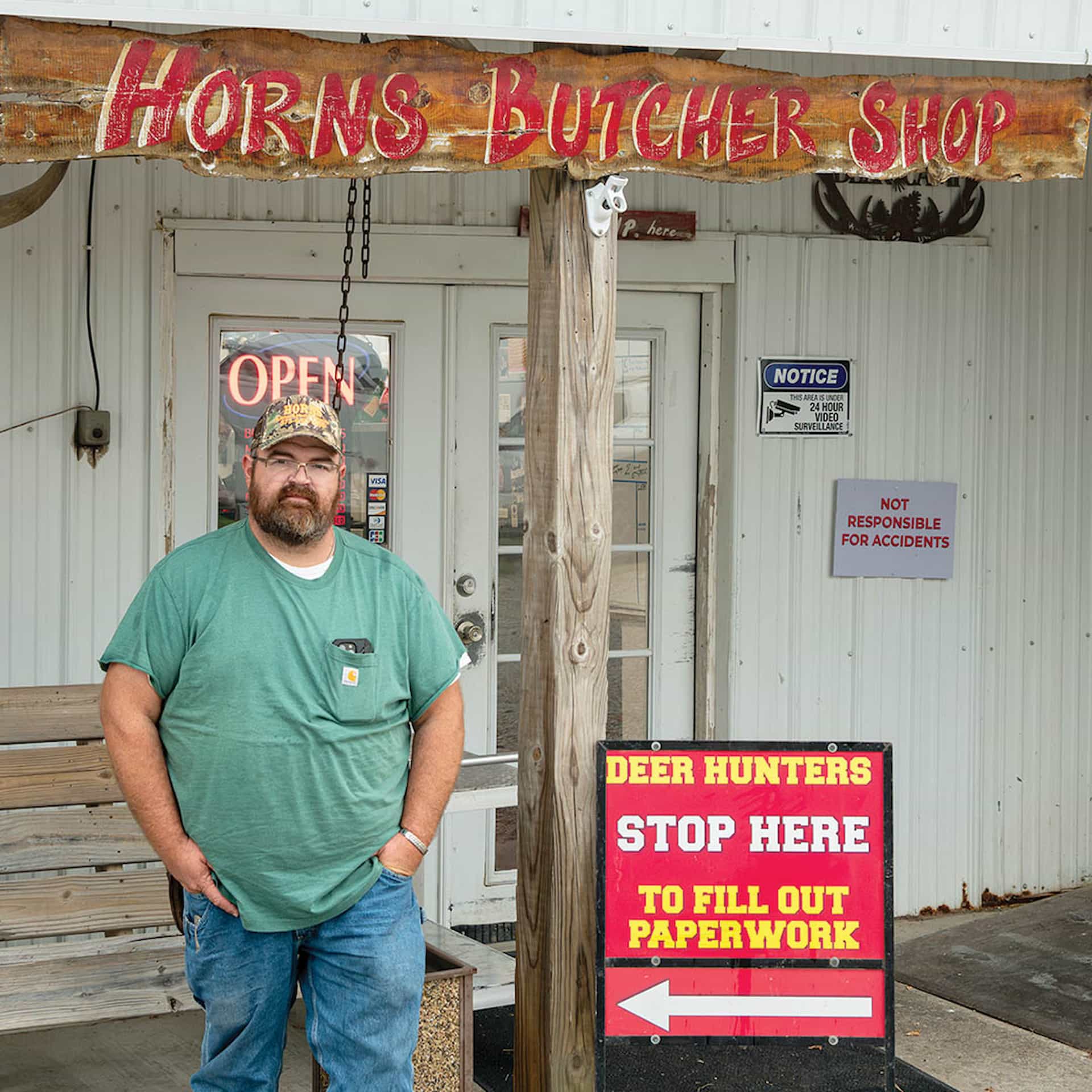
Dustin Horn, owner of Horns Butcher and Meat Processing near Fulton, Mo., became a Share the Harvest partner several years ago and processes about 100 deer donations each season. MDC also sought his input on how to improve the program.
Horn’s biggest advice focused on the required chronic wasting disease (CWD) testing for donated deer harvested in counties within 10 miles of a detected case, which includes much of Missouri. While CWD is not known to infect humans, the Centers for Disease Control recommends testing deer intended for human consumption if CWD exposure is a possibility. Last year, hunters needed to know the exact harvest location for CWD testing, which Horn said put an extra burden on him as the processor assisting them.
“The customer’s biggest problem was finding the township and range,” he said, recalling the feedback he shared with MDC. “I said, ‘You need to take a little of this work off us. Let’s write down the county. If it comes back positive, you guys need to call the hunter and get the exact location.’”
Share the Harvest’s partners heeded that advice. This year, sampling requires only county-
level data. Horn said he’s pleased that the CWD testing process has improved, but his reason for participating remains the same. “It helps a lot of people in the community,” he said.
Horns Butcher Shop distributes the donated meat to food pantries in three counties, including the Laura Miller George Help Center, a food pantry that serves Audrain County. At one pickup at Horns last December, the Help Center received 1,418 pounds of venison, which provided for 734 households.
“Share the Harvest is a true blessing to the Help Center, as at times it is the only meat we have to give out,” said Kim Archer, executive director. To ensure families can cook a complete meal with the meat, Archer said she uses grant funds to stock the pantry with Hamburger Helper after receiving a donation.
Two needs, one solution
Although Missouri hunters harvested more than 300,000 deer last season, a larger harvest could benefit herd health in some high-density areas. Where deer numbers remain high, MDC encourages hunters to take more antlerless deer, particularly does, to support successful deer management.
In addition to liberal antlerless harvest limits and a long deer hunting season, most counties are open during the early (Oct. 9-11) and late (Dec. 5-13) antlerless portions of firearms deer season. In partnership with the Missouri Conservation Heritage Foundation, the first 100 hunters to donate during the October portion will receive a collectible Share the Harvest pocketknife and entry into a meat-grinder drawing.
Even with ample antlerless deer bag limits in most counties, many producers and landowners understand that isn’t always enough. In such cases, through the Deer Management Assistance Program (DMAP), qualifying landowners can receive additional antlerless permits to reduce deer numbers more aggressively.
The program’s objectives fall into two categories: deer damage concerns and recreational deer management, which means balancing the population with available habitat and optimizing the buck-to-doe ratio. Open enrollment for DMAP runs from May 1 to Sept. 1.
For landowners with crop damage concerns, getting started is straightforward. An MDC staff member visits the property, talks with the producer and evaluates the damage using general guidelines. The goal, said Ashleigh Day, private lands deer biologist for MDC, is to ascertain, “Is DMAP warranted? And if so, how many deer do we need to remove to offset that damage? There’s a little bit of a science to it,” she said.
Additional permits can bring another consideration for property owners: what to do with the extra venison. For Mark Lanzotti, a Bollinger County landowner who manages a farm with both row crops and timber, making good use of harvested deer reflects what he calls the “ethos of conservation and land stewardship.”
It’s a philosophy Lanzotti understands firsthand. Many years ago, after deer caused severe damage to his soybeans, he enrolled in DMAP and received additional antlerless permits. Share the Harvest offered a practical way to donate the additional meat to families in his community.
“The Share the Harvest program provides an outlet to help sportsmen utilize those management tags for the betterment of their property while also making a difference in their community,” he said. Today, Lanzotti said deer numbers on his property are healthy, but maintaining that balance requires ongoing management, and he aims to continue donating each season.
Years ago in Dent County, landowner Brian Henderson had so many deer on his property they were damaging the environment.
“You could look out to the tree line, and it looked like the deer had just buzzed a perfectly straight line where nothing was below,” Henderson said. “They’d go as high as they could and eat all the leaves off the trees.”
Although the property produced a large amount of hay, crop damage wasn’t the focus. After enrolling in DMAP, Henderson worked with Day to set recreational management goals: bringing the herd to a sustainable level while increasing buck numbers and antler size.
“Bucks grow their antlers from April to June,” Henderson said. “So, when you’ve got poor nutrition, the deer don’t produce big antlers.”
With the additional tags, Henderson and other hunters began taking more deer. Now, his son and his friends handle much of the doe harvest each season, reducing food pressure and increasing buck numbers.
“It’s really been a great program,” Henderson said. “People enjoy it.”
He also credits Jeff Manthey, owner of Hometown Processing in Salem, as key to that success. “I can literally call him after I’m hunting and say, ‘Hey, I’ve got four or six deer tonight,’” Henderson said. “He’ll say, ‘I’ll meet you there.’”
As a Share the Harvest partner, Manthey helps turn surplus deer harvest into meals for those in need, which Henderson said matters to other landowners considering DMAP.
“Processors are really the linchpin,” Henderson said. “They should feel good that this is going to help neighbors here in the state who need a source of excellent protein.”
A shared purpose
With processors playing such a key role in Share the Harvest, continued support helps make their work—and the program’s success—possible.
Those who wish to donate can visit the Share the Harvest page on MDC’s website. This year, hunters also have another way to contribute: When purchasing permits through the MDC hunting app, they can make a donation in $5 increments.
Last year, nearly 475,000 hunters took to Missouri’s woods and fields in pursuit of deer. If each hunter gave just $5 this season, those small individual contributions could add up to a big impact—and a lot of meals for Missouri families.
“Missourians have always been committed to conservation,” Hindman said. “And a program like Share the Harvest is the crossroads of a successful effort where you bring hunters, landowners, partners and everyone together to manage a resource we all love.”
To find a Share the Harvest processor near you or to learn more about the Deer Management Assistance Program, visit mdc.mo.gov.
Top image cutline: The ground venison goes into 1-pound packages bearing the Share the Harvest logo for distribution to local food banks and pantries.
Middle page image cutline: Dustin Horn, owner of Horns Butcher Shop and Meat Processing, has been a Share the Harvest partner processor for many years and, on average, processes 100 donated deer each season.
***
Read MORE FROM THIS ISSUE
Subscribe Today or MFA Incorporated customers/members may request a subscription at their MFA Agri Services location.