Foraging ahead
by Emily Kummerfeld
MFA field trials evaluate best practices in pasture and hay production
From grasses to legumes, perennials to annuals, producing optimal forages poses many questions for producers. Combining insights from livestock nutrition and agronomy, the solutions are often influenced by weather, climate and costs.
“When one producer faces challenges, there are typically other producers facing that same challenge,” said Landry Jones, MFA range and pasture specialist. “It’s something we emphasize as a company—to be on the forefront and cutting edge of forage production and technology to help producers improve management of their pastures and hayfields.”
It’s the reason MFA Incorporated hosts a Forage Tour each summer. The day-long event combines outdoor field demonstrations with indoor classroom-style presentations. While primarily designed to educate MFA staff to better serve customers, the tour is also open to producers.
The field demonstrations are planned and prepared throughout the previous year and include various types of trials and evaluations, such as examining annuals like triticale, comparing yields among seed varieties, or testing the timing of herbicide applications for fescue establishment.
“These plots allow staff and customers to see firsthand what that end product would be,” Jones explained.
In one trial at the current forage research site in Lebanon, Mo., Marshall ryegrass was planted alongside VNS (variety not stated) ryegrass. While VNS seed is typically cheaper and more widely used, the trial showed that the Marshall variety produced noticeably higher yields—even before any data was collected.
Jones highlighted the takeaway: “You might spend a little more on quality seed upfront, but the increased output makes it well worth the investment.”
In the past, the Forage Tour site changed year to year, but MFA plans to maintain this current research farm, thanks to a partnership with Wall Street Cattle Company. The property, consisting of about 13 acres, has ample space for the Forage Tour to investigate a variety of topics, whether for one season or multiple years.
“With this site dedicated to the Forage Tour for the foreseeable future, we’re able to look at more long-term management decisions and products,” Jones said. Similar to MFA’s agronomy plot trials, those trials would include innovative, new-to-the-market products that can be studied over multiple years to determine their value to producers. “We’ve never been able to do that in the past with forage products,” he added.
Jones said biological products new to forage management are one example, but these will need to be extensively tested before being marketed to producers. Still, he said he’s looking forward to the new topics the Forage Tour can explore in the future.
This year’s Forage Tour on July 1 will feature annual forage demonstrations, including comparisons of branded and non-branded products for yield and performance. Attendees will also see NovaGraz and UltiGraz application test plots, best practices for establishing fescue, and new summer annual varieties, such as prussic acid-free and dwarf sorghum-sudan. In addition, the tour will highlight nitrogen management options, including NKS (nitrogen, potassium and sulfur) and urea blends with ammonium sulfate.
Another benefit of the new Lebanon demonstration site is its convenient location adjacent to the Joel E. Barber School, part of the Laclede County C5 School District, where the indoor portion of the Forage Tour will be held. This year, the afternoon will include two company presentations: WL Alfalfas, a product line of alfalfa seed designed to increase yields and forage quality, and Halter, which manufactures virtual fencing collars for cattle.
Bernardo Candido from MU Extension will also discuss PastureCast, technology that estimates forage availability in pastures and transmits that data to a computer program. MFA’s Jones, along with Davin Harms, MFA retail precision manager, will present on FieldAlytics technology, which uses satellite imagery to estimate forage yields and enable more accurate fertilizer prescriptions.
Although the Forage Tour covers a full day of topics, its goal is simple, Jones said.
“Where is the best bang for their buck? Where are producers going to see the most return on that investment?” he said. “Those are the types of products and innovations we focus on at the Forage Tour so that we can make the most effective recommendations.”
For more information, contact your local MFA Agri Services manager or livestock sales manager or email Jones at ljones@mfa-inc.com.
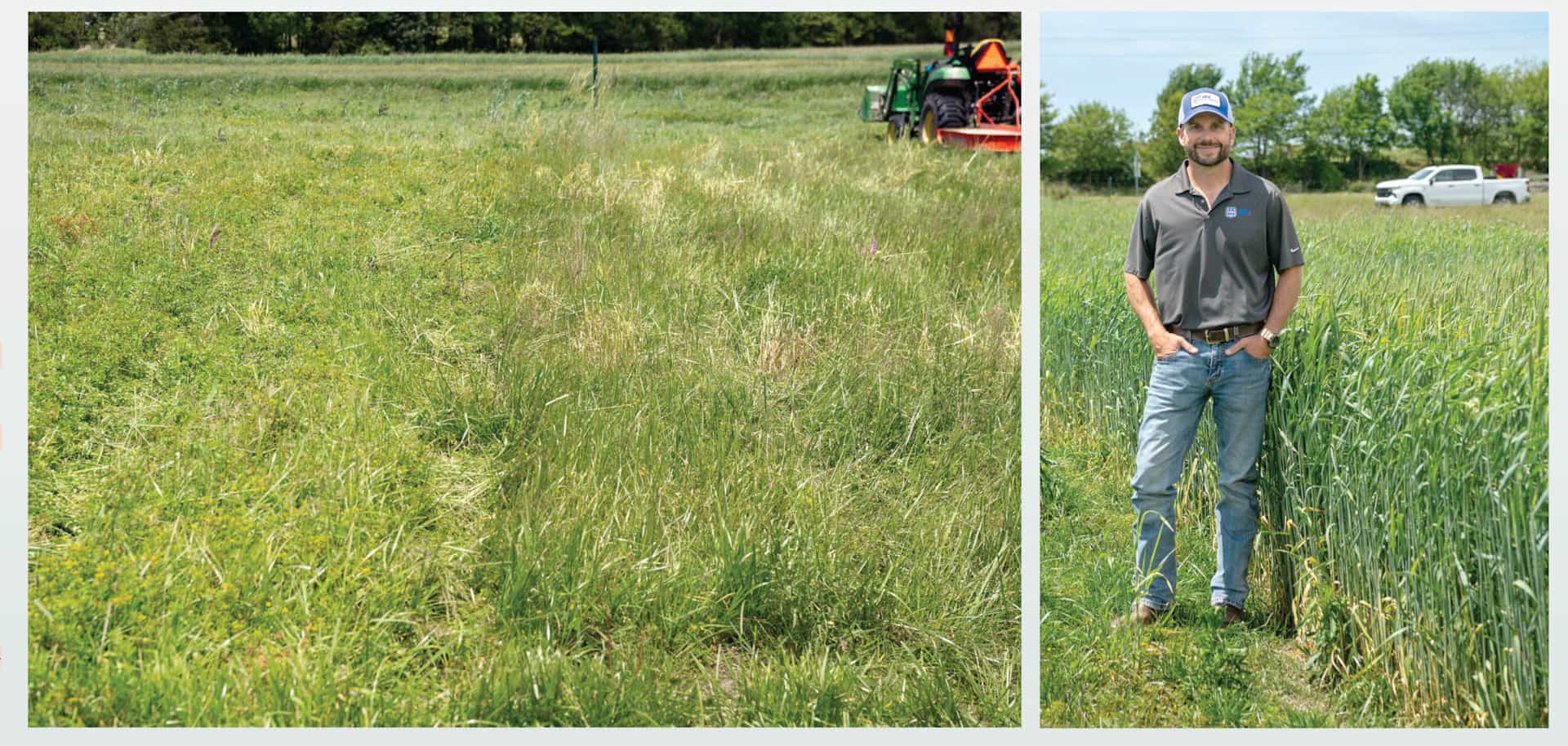
Below left: In one trial demonstrating best practices for establishing fescue, the plot on the right was sprayed with Duracor herbicide before fall planting, while the left side was sprayed with Duracor in the spring, after the fescue was growing. The reduced weed competition seen on the right side highlights the agronomic idea of “start clean, stay clean,” meaning it’s much easier to control weeds with herbicides before they emerge.
Below right: Landry Jones, MFA range and pasture specialist, has prepared field demonstrations over the past year in anticipation of the upcoming 2026 Forage Tour, planned for July 1.
***