More than ever, fly control protects profits
By Dr. Tony Martin
A proactive, season-long strategy of pest management is essential in a high-value cattle market.
Flies do more than irritate cattle.
They cost profit for producers.
In fact, horn flies are the most economically devastating external parasite in cattle, with estimates of $1 billion in annual losses to the U.S. industry. Those losses result from skin irritation, blood loss, disease transmission, decreased grazing efficiency, lower milk production and reduced weight gains.
Even moderate infestations can cut weight gains by about 0.2 pound per head per day, and research shows that calf weaning weights were 10-20 pounds heavier when flies are controlled on the cows. And in today’s high-value cattle market, every pound of gain is more important than ever.
When it comes to fly control, the solution isn’t one product. It’s a plan. An integrated pest management (IPM) program with a multi-faceted approach should begin before flies emerge and continue through the entire grazing season. Components of an effective fly-control program include:
Feed-through products
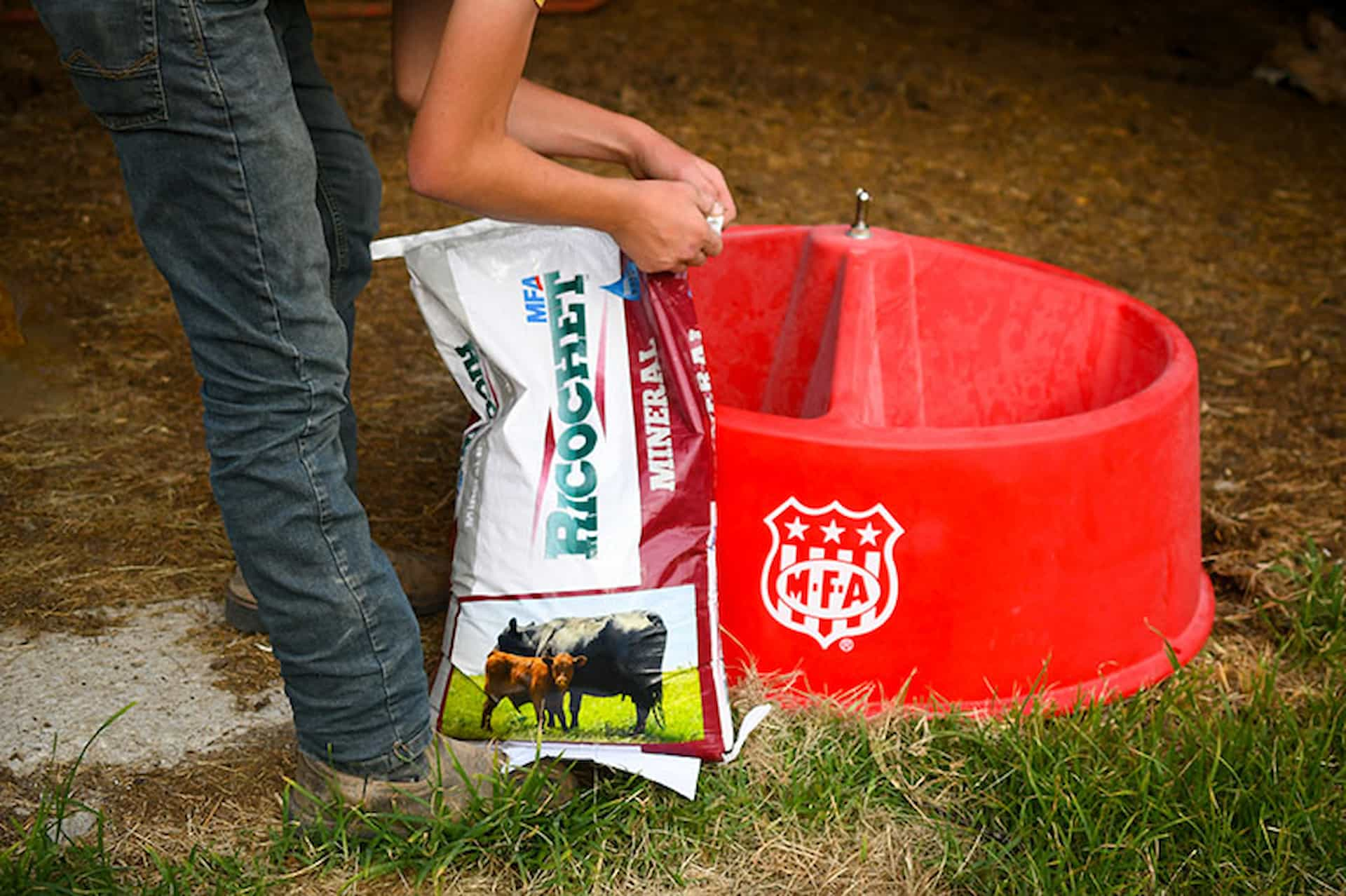
Minerals with insect growth regulators (IGRs) provide a tremendous advantage because they prevent the emergence of adult flies. These products work by delivering an important active ingredient directly to cattle, where it is eventually passed into the animal’s manure. Flies then lay their eggs on the manure, and the IGR interferes with the lifecycle of the fly. MFA Ricochet IGR Minerals are available with either Altosid or Clarifly IGR. They’re a convenient way to manage flies while also delivering essential nutrition.
Insecticide ear tags
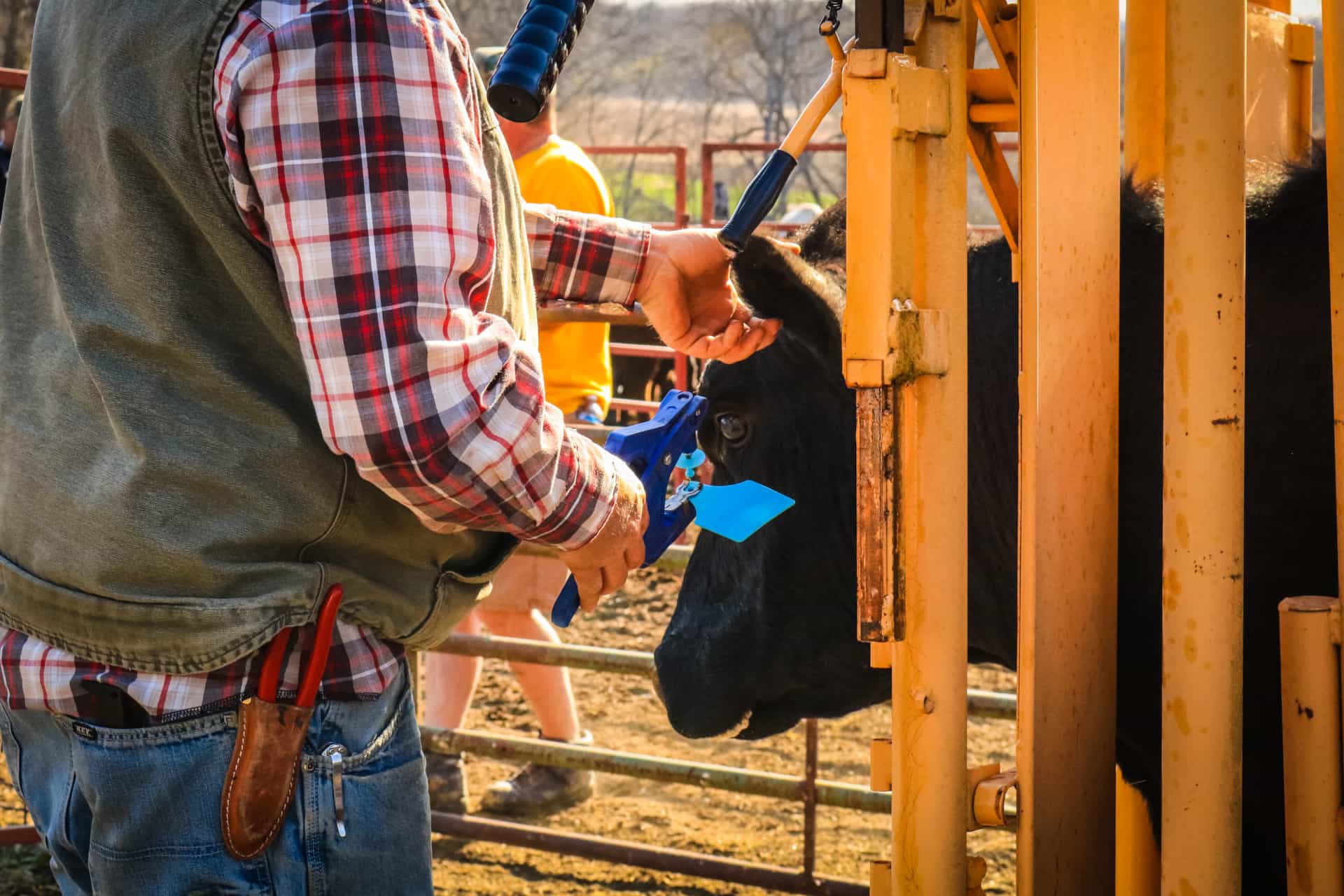
Available through MFA Animal Health, ear tags are simple and effective control options. Usually fly tags should be placed in late spring when fly counts reach a threshold such as 50 flies per side. Tag in mid-May or even June to get the best use out of the tag later in the grazing season. MFA recommends tagging all animals (cows and calves if old enough). If fly pressure remains high into late summer, some operations apply a second tag or use supplemental control. Be sure to rotate chemistries and remove tags at the end of the season to avoid resistance buildup.
Pour-ons and sprays
For additional knockdown, pour-on treatments can conveniently be applied when running animals through handling equipment or alleys. Cattle can also be sprayed with insecticides periodically while out on pasture. This needs to be repeated frequently, and the protection is prone to loss due to rain. Still, they are useful, especially for spot-treating animals or targeting face flies. Always follow label directions. As with ear tags, remember to rotate active ingredients so flies do not become resistant.

Oilers and dusters
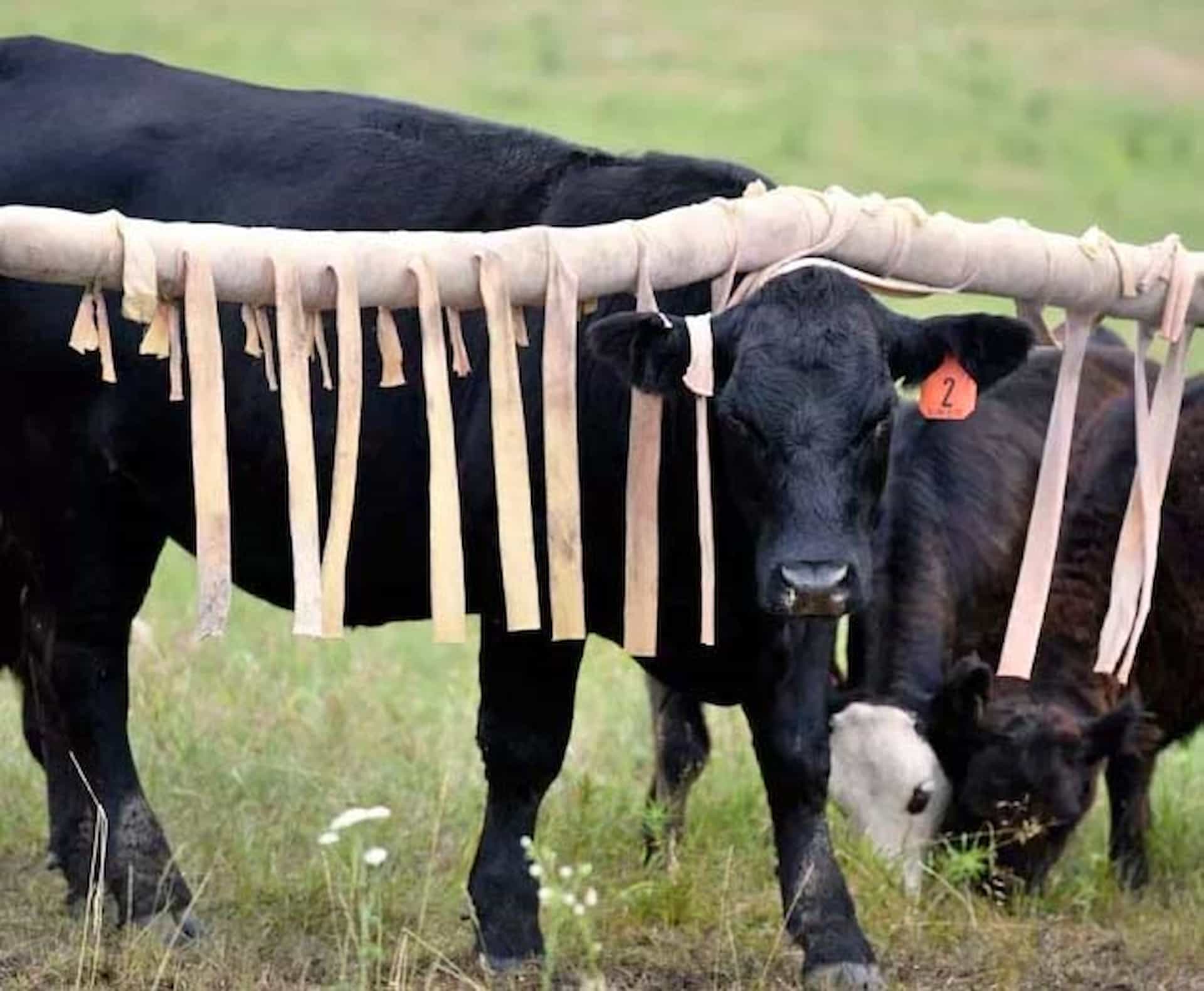
During peak fly season, oilers and dusters can be effective tools, particularly for cattle in a pasture rotation. These self-treatment, low-maintenance systems allow cattle to apply insecticide directly to their skin as they pass under or rub on them. They are most effective when located at mineral sites, gateways or water tanks where every animal will come in contact with the apparatus.
In addition to these methods, cultural practices make a world of difference in fly management. These practices include managing manure, regular cleaning of spilled milk and feed, removing vegetative buildup and soiled or decaying bedding in cattle areas, and maintaining the landscape. Eliminating these breeding sites for flies dramatically reduces their population in a cattle operation.
The key to effective fly control is simple: start early and stay aggressive all season long. In a market where every pound carries significant value, protecting cattle from flies is not an expense—it’s an investment in performance and profitability. Talk with your MFA solutions provider to build your plan before the season begins. Browse MFA Connect to search for fly control products available from your local MFA.